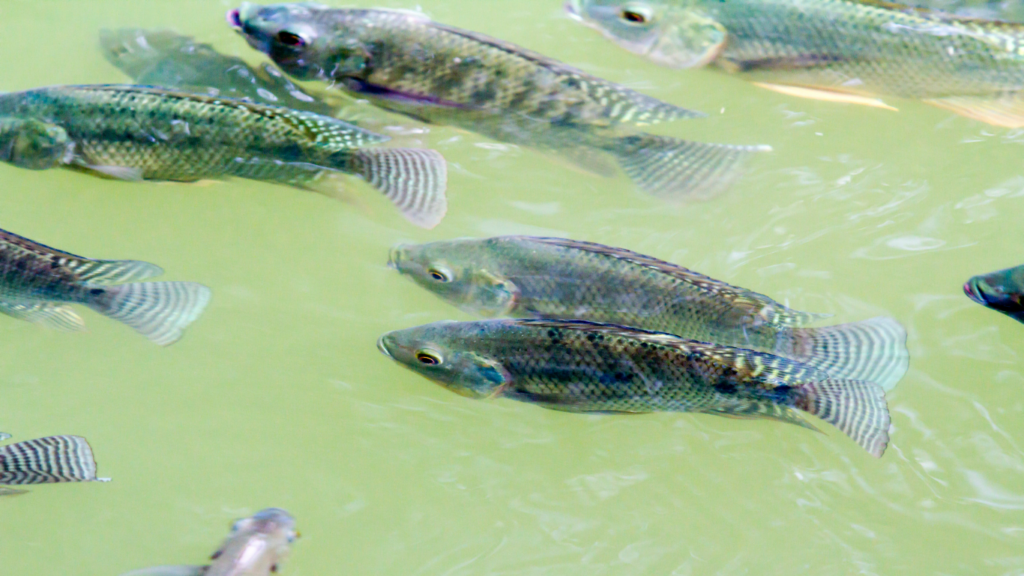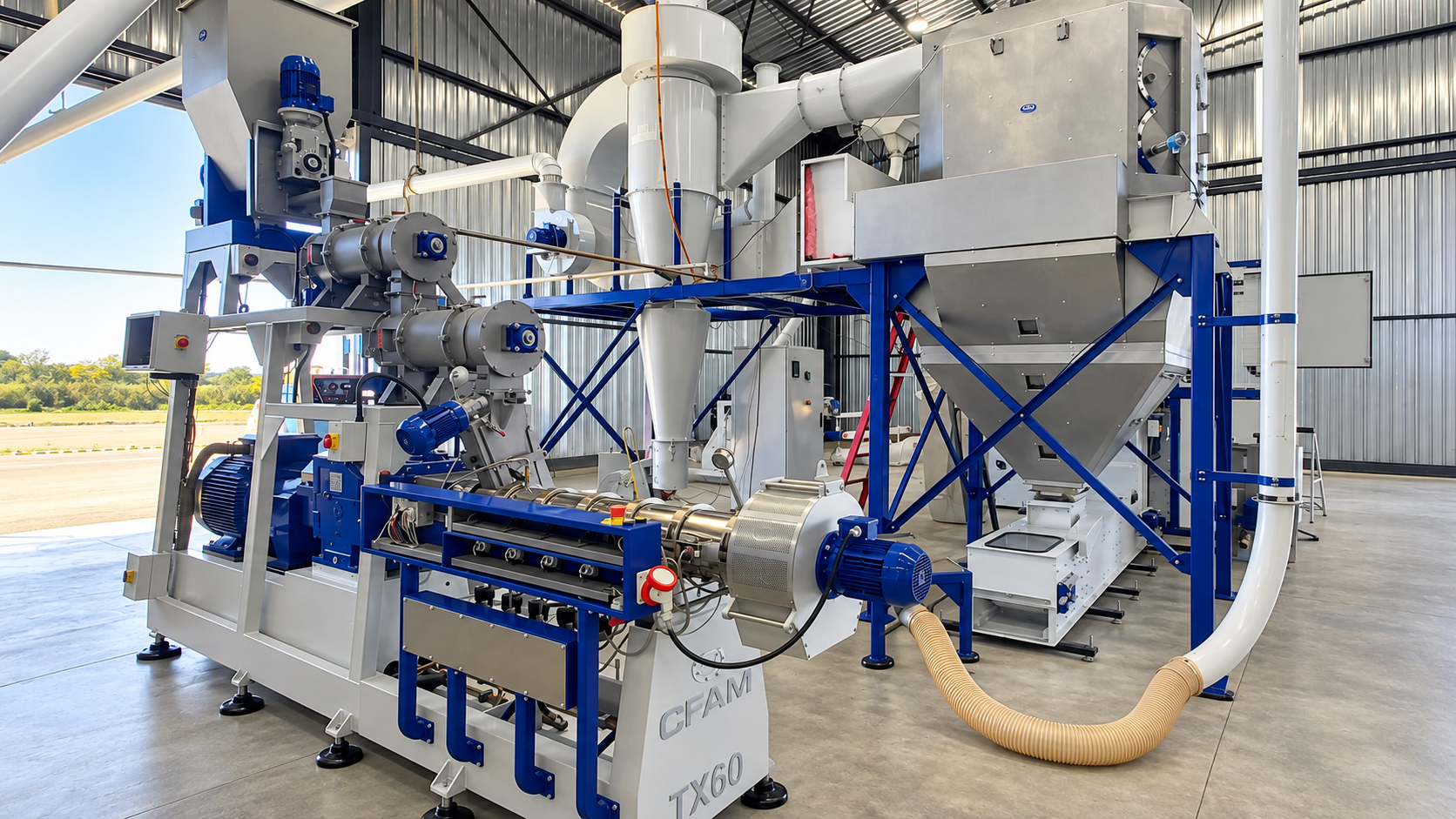
A modern aqua feed plant is far more than an extruder placed between a mixer and a packaging line. The quality of the finished feed depends on the entire production system working together — from raw-material intake and grinding to drying, coating, cooling and packaging. A high-quality aqua feed should consistently deliver:
- Accurate nutritional content
- Uniform pellet size and shape
- Reliable floating or sinking behaviour
- Good water stability
- Low fines
- Safe moisture levels
- Correct oil content
- Strong pellet durability
- Efficient feed conversion
The central principle is simple:
Good aqua feed is produced by a complete and integrated process — not by the extruder alone.
Start with the final product
Before designing the plant, the intended feed range must be defined. Important questions include:
- Which species will be fed?
- Which life stages are targeted?
- What pellet sizes are required?
- Should the feed float, sink slowly or sink?
- What protein and oil levels are needed?
- Will starter feeds or vacuum coating be required?
- What production volumes are expected?
A plant producing 5 mm floating tilapia feed will require a different setup from one producing 0.8 mm starter feed or high-oil trout feed.
From raw materials to finished feed
A modern aqua feed plant typically includes the following stages:
- Raw-material intake and storage
Ingredients must be received, inspected and stored safely. Good systems should control:
- Contamination
- Moisture
- Dust
- Pests
- Cross-contamination
- Traceability
Ingredient quality at intake directly affects the final feed.
- Grinding
Aqua feed generally requires fine and consistent particle size. Good grinding improves:
- Mixing
- Extrusion stability
- Pellet quality
- Digestibility
- Small-pellet production
However, excessive grinding also increases energy use, so the specification must match the intended product.
- Dosing and mixing
Accurate dosing is essential, especially for vitamins, minerals, additives and liquids. Poor batching or mixing can result in nutritional inconsistency, which may affect fish growth and farm performance.
- Preconditioning
Before extrusion, steam and water are added to the feed mixture. Preconditioning helps:
- Increase moisture and temperature
- Begin the cooking process
- Improve product consistency
- Stabilise extrusion
- Increase throughput
Good steam quality and residence time are critical.
- Extrusion
The extruder cooks and shapes the feed. Operators control parameters such as:
- Temperature
- Pressure
- Moisture
- Screw speed
- Feed rate
These influence pellet density, texture, expansion and floating behaviour.
Twin-screw extrusion can provide greater flexibility, particularly when using variable raw materials or producing multiple feed types.
- Shaping and cutting
The die determines pellet diameter, while the cutter controls length.
Precision becomes especially important for starter and juvenile feeds.
- Drying
Fresh extruded pellets contain too much moisture for safe storage. Proper drying is essential for:
- Shelf life
- Pellet strength
- Microbial safety
- Stable final moisture
Under-drying can cause mould, while over-drying can cause cracking, fines and unnecessary energy consumption.
- Oil coating
After drying, oils and liquid additives may be applied. Atmospheric coating can be used for moderate oil levels, while vacuum coating is more suitable for high-energy feeds where deeper oil absorption is required.
- Cooling and screening
Pellets must be cooled before packaging to prevent condensation. Screening removes:
- Fines
- Broken pellets
- Oversize material
- Agglomerates
Excessive fines are both a product loss and a sign of possible process problems.
- Packaging and storage
Finished feed should be packed, labelled and stored under clean, dry conditions. Traceability must continue through to the final product.
Automation and quality control
Modern plants benefit from integrated automation for:
- Recipe control
- Process monitoring
- Production records
- Traceability
- Consistency
However, automation does not replace skilled operators. A well-equipped laboratory is also essential for testing both incoming ingredients and finished feed.
Utilities matter
Reliable utilities are critical to plant performance. Aqua feed production may require:
- Electricity
- Steam
- Process water
- Drying heat
- Compressed air
Poor utilities can limit throughput, affect feed quality and increase operating costs.
Safety and maintenance
Aqua feed plants handle dust, heat and heavy machinery. Good design should include:
- Dust control
- Fire protection
- Safe access
- Maintenance space
- Easy equipment inspection
Preventive maintenance is essential for long-term reliability.
Design for future growth
A plant should not only meet today’s needs. It should also allow for:
- New feed types
- Additional pellet sizes
- Higher production volumes
- New coating systems
- Future expansion
Planning for flexibility early can reduce expensive modifications later.
People make the difference
Even the best equipment requires skilled people. Successful plants depend on:
- Operators
- Nutritionists
- Quality personnel
- Maintenance teams
- Process engineers
Training and ongoing technical support are essential for consistent performance.
Conclusion
A modern aqua feed extrusion plant is a complete production system. Every stage — from raw-material intake to packaging — contributes to the final feed quality. A strong extruder cannot compensate for weak grinding, inaccurate dosing, poor preconditioning, uneven drying or inadequate quality control. The most successful plants combine technology, process design, automation, quality systems and skilled people into one integrated operation. Good aqua feed is produced by the complete process — not by the extruder alone.
Through the CFAM African Aqua Feed Value Initiative, CFAM supports industry partners with plant design, equipment integration, process development and complete aqua feed production solutions.