A new extruded snack needs a clear place in the consumer’s day. It might be a lunchbox option, a convenient snack between meals or a savoury product for sharing. Defining that purpose early helps manufacturers make better decisions about formulation, flavour, pack size and price.
The broader snack market demonstrates the scale of consumer spending. According to Circana data published by SNAC International, US snack food sales reached $20.2 billion in the second quarter of 2026, increasing 2.2% compared with the same period in 2025. However, unit sales declined slightly by 0.2%, showing why manufacturers should distinguish between growth in sales value and growth in the number of products purchased.
For wholegrain snack developers, the opportunity lies in combining nutritional value with an enjoyable eating experience. Wholegrain and protein-enriched recipes can introduce different grains and plant proteins into familiar formats, such as puffs, curls, rings and crunchy bites. The finished product must still deliver the flavour, texture and convenience consumers expect.
There are encouraging signals in neighbouring grain-based categories. SNAC International’s 2025 State of the Industry Report reported that US crackers carrying multigrain claims recorded 2.3% growth in dollar sales and 4.9% growth in volume. Multigrain does not necessarily mean wholegrain, and crackers are a different category from extruded snacks, but these figures offer a useful indication of interest in grain-based product differentiation.
Established snack categories also show that innovation competes within a substantial market. The same report placed the US corn snacks category at nearly $2 billion, with dollar sales increasing 1.3%, while unit and volume sales remained flat. These figures reinforce the need for a convincing reason to choose a new product, whether that is distinctive flavour, appealing texture, nutritional value or price. These are US market indicators and should guide questions for South African development rather than serve as local demand forecasts.
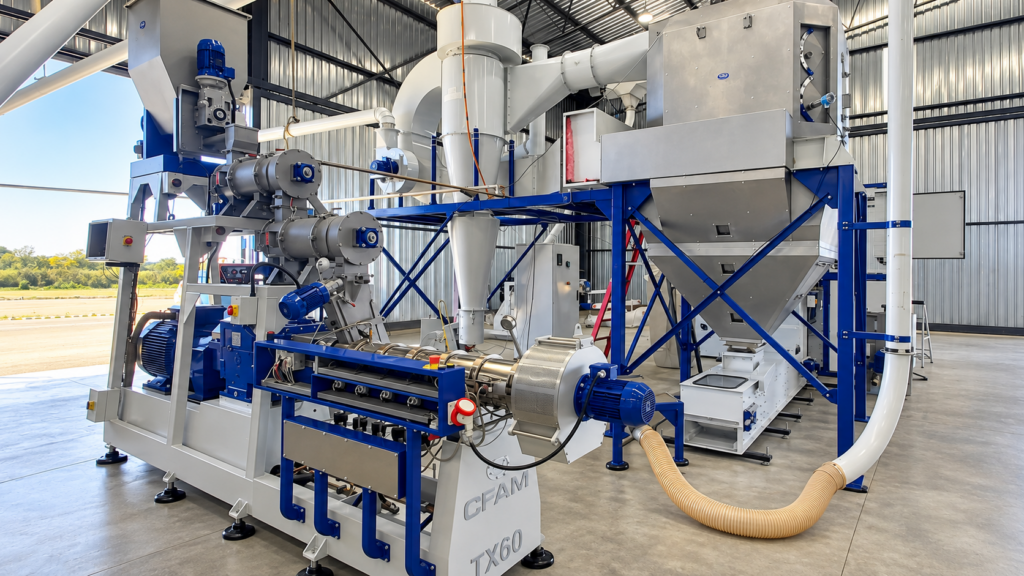
Twin-screw extrusion supports the technical development process by allowing manufacturers to explore different ingredient blends and snack formats. Wholegrain flours and protein ingredients can affect expansion, density and texture, making practical trials important. Pilot production helps establish whether a concept delivers the intended crunch and appearance before larger production commitments are made.
Those trials also provide samples for consumer evaluation. Testing should explore more than whether people enjoy the flavour. Would they buy the snack at the proposed price? Is the portion appropriate? Do they understand its nutritional benefits? Comparing a prototype with products already on the shelf helps manufacturers assess whether it offers a meaningful advantage.
Commercial assessment should run alongside product development. Ingredient availability, production yield, seasoning, packaging and distribution all contribute to the cost of the finished snack. Packaging and shelf-life testing are equally important to confirm that the product maintains its quality throughout storage and distribution.
For manufacturers considering wholegrain snacks, a focused starting point is one well-defined product for one clear audience. Confirm the nutritional composition, refine the eating experience and test willingness to buy. Combining these findings with extrusion expertise and realistic production costs gives a promising recipe a stronger foundation for commercial success.