
In the ever-evolving landscape of food processing, one technology stands head and shoulders above the rest in terms of versatility, efficiency, and innovation: twin-screw extrusion. This sophisticated method has become a cornerstone of modern food production, offering a remarkable range of capabilities that are transforming how we create everything from breakfast cereals to meat analogs.
So, what makes twin-screw extrusion the powerhouse of food processing? The answer lies in its unparalleled control and adaptability. Unlike its single-screw counterpart, a twin-screw extruder utilizes two intermeshing screws that rotate in the same or opposite directions within a barrel. This intricate design unlocks a level of precision and control that is simply unmatched.
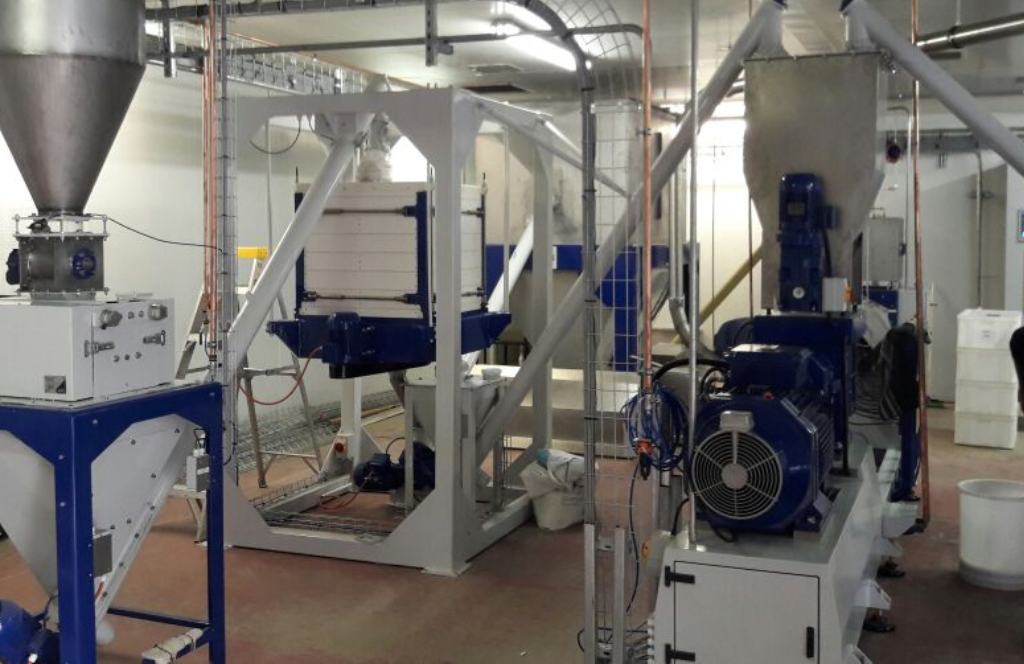
The advantages are clear:
- Superior mixing & homogenization: The intermeshing screws provide intense mixing, ensuring uniform distribution of ingredients, even those with vastly different properties. This is crucial for creating consistent textures, flavors, and nutritional profiles.
- Precise control over process parameters: Twin-screw extruders allow for meticulous control over temperature, pressure, shear rate, and residence time. This fine-tuning enables manufacturers to optimize the process for specific ingredients and desired product characteristics.
- Greater raw material flexibility: From delicate starches to robust proteins, twin-screw extruders can handle a wider range of raw materials than other methods. This versatility opens doors to using novel ingredients and creating innovative products.
- Enhanced texturization & structure formation: The unique combination of shear and temperature allows for the development of specific structures within the food matrix. This is particularly important for creating textured vegetable proteins (TVP), meat analogs, and puffed snacks.
- Improved product quality & shelf life: By controlling the extrusion process, manufacturers can minimize degradation of nutrients, enhance digestibility, and improve the overall quality and shelf life of the final product.
- Continuous and efficient production: Twin-screw extrusion is a continuous process, allowing for high-throughput production with minimal downtime. This efficiency translates into lower manufacturing costs and increased profitability.
The future of food processing is here:
As consumer demand for innovative, healthy, and sustainable food products continues to grow, twin-screw extrusion is poised to play an even greater role in shaping the future of the food industry. Its ability to control the food matrix at a molecular level, coupled with its efficiency and versatility, makes it the most effective and adaptable method for meeting the challenges and opportunities of tomorrow’s food landscape.
In conclusion, while other food processing methods have their place, twin-screw extrusion stands out as the most effective due to its unparalleled control, flexibility, and ability to create a wide range of high-quality, innovative food products. It is a technology that is not only shaping the food industry today but will continue to revolutionize it for years to come.