The commercial performance of an aqua feed depends on far more than its crude-protein percentage. Fish require the correct balance of digestible protein, essential amino acids, energy, lipids, vitamins and minerals. These requirements change according to species, fish size, life stage, water temperature and farming conditions. Two of Africa’s most important farmed species are:
- Nile tilapia
- African catfish
Both can be produced commercially in ponds, tanks, cages and intensive farming systems, but their nutritional requirements are not identical. Tilapia can use a broad range of plant-based ingredients and generally requires lower protein levels during grow-out. African catfish typically benefits from more nutrient-dense diets, especially during the starter and juvenile stages. The objective is therefore not to formulate the feed with the highest nutrient concentration. It is to provide the correct balance of digestible nutrients at the lowest sustainable cost while achieving strong biological performance.
Why crude protein alone is not enough
Crude protein is one of the first values examined on a feed label, but it does not tell us:
- How much protein the fish can digest
- Whether the amino-acid profile is balanced
- Whether protein quality has been damaged during processing
- Whether enough dietary energy is available
- Whether the ingredients are nutritionally effective
Two feeds can both contain 32% crude protein and still deliver very different growth and feed conversion. A well-balanced feed with highly digestible ingredients may outperform a feed with a higher crude-protein level but poorer ingredient quality.
Protein requirements change with fish size
Young fish generally require more protein than larger fish because they grow rapidly relative to body weight and need highly digestible nutrients. Indicative crude-protein ranges may include:
- Tilapia starter: 38–44%
- Tilapia grower: 28–34%
- Catfish starter: 40–46%
- Catfish grower: 30–38%
These are planning ranges rather than universal formulation specifications. The final requirement depends on factors such as:
- Ingredient digestibility
- Fish genetics
- Water temperature
- Stocking density
- Feed intake
- Energy level
- Amino-acid balance
- Target growth rate
- Economic objectives
A well-balanced 30% protein feed may outperform a poorly balanced 35% protein feed.
Digestible protein matters
Fish can only use the portion of feed that is digested and absorbed. Protein digestibility is influenced by ingredient type, processing, freshness, particle size, fibre, antinutritional factors and extrusion conditions. For this reason, aqua feed formulation should focus increasingly on digestible nutrient values, not only total nutrient values.
Essential amino acids
Fish require essential amino acids that cannot be produced in sufficient quantities by the body. Important examples include:
- Lysine
- Methionine
- Threonine
- Arginine
- Tryptophan
- Valine
- Leucine
- Isoleucine
Lysine and methionine are frequently limiting in plant-based feeds. A feed may contain enough crude protein overall, but if one essential amino acid is deficient, the fish cannot use the remaining protein efficiently. This can result in:
- Slower growth
- Poorer FCR
- Increased nitrogen waste
- Higher feed cost
Protein and energy must be balanced
Protein is one of the most expensive components of feed. Ideally, it should be used for growth rather than burned as an energy source. If energy is too low, fish may use valuable protein for energy. If energy is too high, fish may reduce feed intake and consume insufficient protein. The correct protein-to-energy ratio is therefore essential for both biological and economic performance.
Lipids and essential fatty acids
Lipids provide concentrated energy and essential fatty acids. They also influence:
- Palatability
- Vitamin absorption
- Immune function
- Reproduction
- Flesh quality
Tilapia and African catfish can use moderate lipid levels effectively, but excess oil may affect pellet density, expansion, durability and storage stability. High oil levels are often added after extrusion and drying to protect pellet structure and maintain the required energy concentration.
Carbohydrates and starch
Tilapia can generally use starch effectively, while African catfish also has useful carbohydrate utilisation ability. Starch plays both a nutritional and processing role. It contributes to:
- Dietary energy
- Pellet binding
- Expansion
- Density control
- Water stability
- Pellet texture
Too little starch can produce weak or poorly floating pellets. Too much starch can dilute protein and reduce nutrient density. The correct starch level must therefore support both the fish and the extrusion process.
Vitamins and minerals
Fish require a complete vitamin and mineral programme. Important vitamins include vitamins A, D, E, K, C and the B vitamins. Important minerals include phosphorus, calcium, magnesium, iron, zinc, manganese, selenium and iodine. Vitamin losses during extrusion, drying and storage must also be considered. Phosphorus deserves particular attention because poorly available phosphorus can increase waste and contribute to water pollution.
Tilapia nutrition
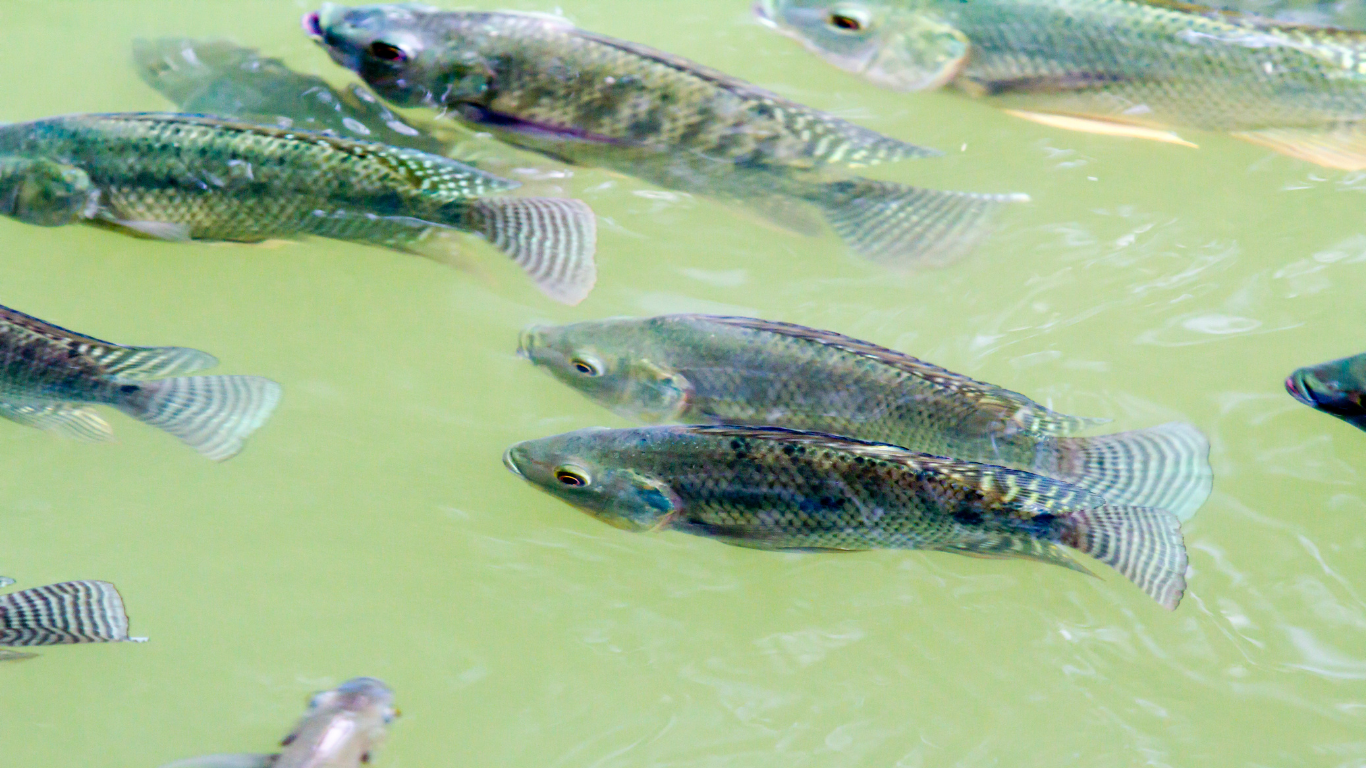
Nile tilapia is an omnivorous species that can utilise a wide variety of ingredients, including:
- Soybean meal
- Maize
- Wheat
- Sunflower meal
- Canola meal
- Groundnut cake
- Insect meal
- Selected animal-protein meals
Tilapia feeds typically focus on:
- Cost-effective digestible protein
- Adequate lysine and methionine
- Moderate lipid levels
- Suitable starch
- Controlled fibre
- Good floating performance
- Correct pellet size
As tilapia grows, protein levels can usually be reduced, helping control feed cost. However, reducing nutrient quality too aggressively can harm FCR and extend time to market.
African catfish nutrition
African catfish is a fast-growing species with strong commercial potential. It generally benefits from:
- Higher digestible protein
- Higher energy density
- Strong palatability
- Balanced amino acids
- Good lipid quality
- Strong but digestible pellets
Starter and juvenile diets are especially nutrient-dense because early growth strongly influences survival, size uniformity and later grow-out performance.
Nutrition and extrusion must be developed together
A formulation can look correct on paper and still perform poorly during extrusion. Ingredients influence:
- Water absorption
- Expansion
- Pellet density
- Die pressure
- Energy use
- Water stability
- Drying
- Oil absorption
For example:
- High oil before extrusion may reduce expansion
- High fibre may weaken pellets
- Low starch may reduce floating performance
- Variable moisture may destabilise the process
Nutritionists and process engineers therefore need to work together to achieve both nutritional quality and consistent production.
How should feed performance be evaluated?
A commercial feed should be assessed both in the laboratory and on the farm. Laboratory evaluation may include:
- Moisture
- Protein
- Amino acids
- Fat
- Fibre
- Ash
- Minerals
- Mycotoxins
- Pellet density
- Water stability
- Durability
Farm evaluation should include:
- Feed intake
- FCR
- Growth rate
- Survival
- Size uniformity
- Fish health
- Time to market
- Water quality
- Feed cost per kilogram of fish produced
The final judgement should not be based only on whether the feed meets its label specification. It must deliver acceptable biological and economic performance.
Conclusion
Good tilapia and African catfish feed is built on balance. It must provide:
- Sufficient digestible protein
- Correct essential amino acids
- Appropriate energy
- Suitable lipids and fatty acids
- Usable carbohydrates
- Controlled fibre
- Complete vitamins
- Available minerals
These requirements change with species, fish size and farming system. The central principle is simple: Good aqua feed is not defined by the highest crude-protein level. It is defined by the correct balance of digestible nutrients that produces efficient fish growth at an acceptable cost.
Through the CFAM African Aqua Feed Value Initiative, CFAM supports industry partners with raw-material evaluation, formulation development, extrusion trials, feed-quality testing and the development of complete tilapia and African catfish feed programmes.