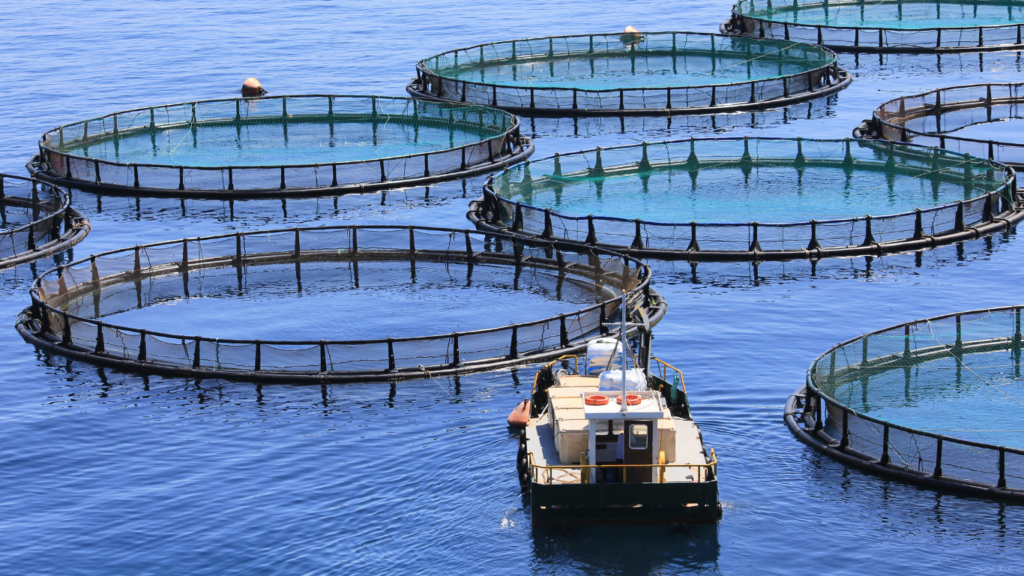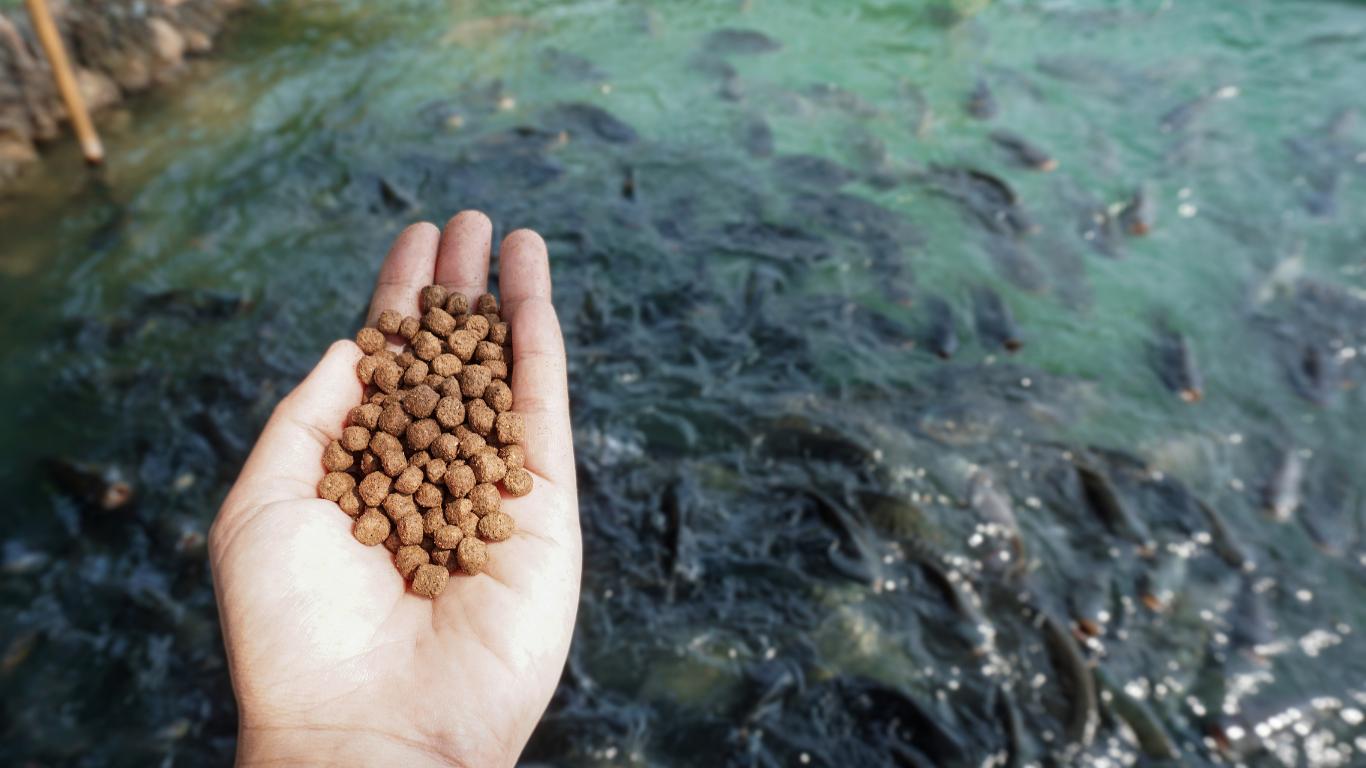
Feed is usually the largest operating cost in commercial aquaculture, often representing approximately 40–70% of total production expenses. It is therefore understandable that large fish farmers consider investing in their own aqua feed production. Own-feed production can offer important advantages:
- Greater control over feed quality
- Improved security of supply
- Lower transport exposure
- Reduced dependence on distributors
- Formulations tailored to the farm
- Faster response to raw-material prices
- Potential sales to neighbouring farmers
However, producing feed internally is not automatically cheaper. A feed plant requires capital, working capital, technical expertise, raw-material procurement, quality control, maintenance, utilities and sufficient annual utilisation.
The real question is therefore not:
“Can we manufacture our own feed?”
It is:
“Can we produce feed consistently, at sufficient scale and at a lower total cost per kilogram of saleable fish?”
Why farms consider vertical integration
High feed costs
Where feed represents more than half of total farming costs, even modest savings can significantly improve margins. But a proper comparison must include the full internal production cost:
- Raw materials and premixes
- Labour
- Electricity, steam and fuel
- Maintenance and wear parts
- Packaging
- Quality control
- Depreciation and finance
- Working capital
- Inventory losses
- Plant downtime
- Technical and management costs
Only then can internally produced feed be compared fairly with purchased feed.
Supply security
Feed shortages can slow growth, extend production cycles and disrupt harvest schedules. For large farms located far from major feed suppliers, local production can reduce stock-out risk and improve supply reliability.
Feed quality
Own production can give the farm more control over protein, energy, pellet size, floating behaviour, water stability and oil content. However, this advantage only exists where strong formulation, raw-material and process-control systems are in place.
Scale is critical
The most important factor is annual feed consumption. A plant must operate at reasonable utilisation to spread fixed costs over sufficient production volume. Using conservative assumptions of 16 operating hours per day, 300 days per year and 75% effective utilisation:
- 500 kg/h: approximately 1,800 tonnes/year
- 1 t/h: approximately 3,600 tonnes/year
- 2 t/h: approximately 7,200 tonnes/year
- 3 t/h: approximately 10,800 tonnes/year
- 5 t/h: approximately 18,000 tonnes/year
The farm does not necessarily need to consume all this feed itself, but surplus production should not be assumed to find a market automatically. External sales bring additional requirements such as packaging, branding, customer service, credit control and technical support.
Converting fish production into feed demand
Annual feed demand can be estimated using:
Annual feed requirement = annual fish production × FCR
For example, at an average FCR of 1.4:
- 1,000 t fish requires approximately 1,400 t feed
- 2,500 t fish requires approximately 3,500 t feed
- 5,000 t fish requires approximately 7,000 t feed
- 8,000 t fish requires approximately 11,200 t feed
This helps determine whether the farm can realistically support its own plant.
Feed price is not the only measure
A cheaper feed can still cost more if its feed conversion ratio is poor.
For example:
- Purchased feed: USD 900/t at FCR 1.30
- Own feed: USD 760/t at FCR 1.65
The purchased feed costs approximately USD 1.17 per kg of fish produced, while the cheaper own feed costs approximately USD 1.25 per kg of fish.
The key calculation is:
Feed cost per kilogram of fish = feed price per kilogram × FCR
This should be central to every make-or-buy decision. Feed performance also influences growth rate, survival, harvest timing, water quality and overall farm productivity.
Own-feed production requires more than an extruder
A successful operation requires:
- Species-specific nutritional expertise
- Reliable raw materials
- Fine grinding
- Accurate dosing and mixing
- Preconditioning
- Extrusion
- Drying
- Coating
- Cooling
- Screening
- Packaging
- Automation
- Laboratory testing
- Skilled operators and maintenance personnel
The farm must be prepared to operate a manufacturing business alongside its aquaculture operation.
When own-feed production makes sense
Vertical integration is most attractive where the farm has:
- High and predictable annual feed consumption
- Several production sites in one region
- High purchased-feed transport costs
- Limited supplier choice
- Reliable access to competitively priced raw materials
- Strong technical and management capability
- Reliable utilities
- Sufficient working capital
- Quality-control capability
- A long-term expansion plan
It becomes even more attractive where additional demand can be secured from contract growers, associated farms, hatcheries or nearby producers.
When buying feed may remain the better option
Purchasing feed may still make more sense where:
- Annual consumption is too low
- Demand is unpredictable
- Reliable suppliers are available
- Raw materials must travel long distances
- Skilled technical staff are unavailable
- Working capital is limited
- Plant utilisation would be low
- Existing commercial feed delivers strong FCR
- Management needs to focus on fish production
Other options can also provide supply security, including contract manufacturing, toll extrusion, joint ventures or shared regional plants.
A structured decision process
Large fish farmers should follow a disciplined approach:
- Measure actual feed use
Review purchases, prices, pellet sizes, FCR, freight costs and supplier performance. - Forecast future demand
Model expansion, stocking plans and fish output over the next five to ten years. - Complete a make-or-buy analysis
Compare purchased feed with fully costed internal production. - Evaluate raw materials
Assess availability, cost, quality and seasonal variation. - Develop and test feed
Conduct pilot trials before selecting the final plant. - Select modular capacity
Install capacity justified by realistic demand, with room for expansion. - Validate performance on the farm
Compare growth, FCR, survival, water quality and total production economics.
Conclusion
Producing feed internally can significantly improve control, supply security and long-term business resilience. But the decision should be based on scale, plant utilisation, technical capability and feed performance, not simply the difference between purchased-feed price and raw-material cost. The central principle is:
A fish farm should produce its own feed only when it can manufacture a consistent product at sufficient utilisation and achieve a lower total feed cost per kilogram of saleable fish.
Through the CFAM African Aqua Feed Value Initiative, CFAM supports large fish farmers with feed-demand modelling, make-or-buy studies, raw-material evaluation, product development, plant-capacity selection and complete extrusion solutions.